
Compare the Values on a Crenshaw County Property Record
Crenshaw County property records show several value fields that measure different things. Note the year, class, and source before you compare them.
| Value | What It Is | Where |
|---|---|---|
| Appraisal | Tax system's property appraisal figure | Revenue Commissioner account |
| Assessed value | Class-based portion used in tax administration | Tax property-details rows |
| Last sale or consideration | Amount associated with a transfer, if stated | Recorded deed or transfer evidence |
| Land and improvements | Separate components returned in the tax data | Property details |
Alabama sets Class I at 30 percent, Class II at 20, Class III at 10, and Class IV at 15 for assessment purposes. Classification drives that math. An assessed value in Crenshaw County therefore can never be read as a sale price.
Estimate a Crenshaw County Property Value from Official Fields
Begin at the county tax portal. It displays the appraisal and assessed fields, searches by owner, receipt, or parcel, and offers tax years 2013 through 2025 plus an All Years view for a Crenshaw County property search.
- Identify the exact parcel or tax account.
- Record appraisal, assessed value, land and improvement components, class, and year.
- Check the newest recorded deed for stated consideration when available.
- Keep official assessment and transaction evidence in separate columns.
- Assessed value
- The class-based amount used in tax administration.
- Appraisal
- The appraisal figure displayed by the county system.
- Assessment ratio
- The class percentage applied under Alabama rules.
Read Crenshaw County's Property-Details Fields Together
A Catalis result packs a lot onto one screen. Parcel ID, district, appraisal, and assessed amount may all appear together. Due amount, legal description, exemptions, and tax breakdown may appear as well. One account sometimes spans several parcel rows. Assigning the account total to a single tract without checking the detail is how Crenshaw County parcel comparisons go wrong. The official record view organizes these fields. But it is tax administration, not an independent appraisal of one property.
Act 2024-344 Affects Current Crenshaw County Comparisons
ALDOR sets an Oct. 1, 2024 base year with caps for certain Class II and III taxable assessed values. Ownership changes, new parcels, and additions are excluded. Note the class and whether a number is true, assessed, taxable, or capped.
Exemptions Change Taxable Amounts, Not Market Evidence
Exemptions explain why two nearly identical Crenshaw County assessments produce different taxable amounts. The tax breakdown tells the same story. Neither number establishes a market sale price. For bills, exemptions, or appeals, see Property Tax Records.
Recorded Consideration Is a Different Crenshaw County Number
A deed can carry sale or consideration evidence. Confirm the instrument, parties, date, and legal description first. Some conveyances are not arm's-length market transactions, so a stated amount should never be labeled the present market value of the parcel. For exact fields, coverage, and image prices, confirm details on the Probate route before purchasing deed images.
County Office Routes for a Crenshaw Property Value
The Revenue Commissioner sits at 29 S Glenwood Avenue, Luverne. The main number is 334-335-6568 Ext. 231. Appraisal staff answer at extensions 247 and 254. Callers should ask which assessment year and classification the office is reporting. Mail and public-record requests should carry the parcel ID, legal description, and tax year. Include the requested fields, format, and a cost ceiling. Alabama Code §§36-12-40 through 36-12-47 governs the resident access procedures.
Property Location Labels Can Distort Comparisons
Luverne, Brantley, and Dozier are municipalities. Glenwood, Rutledge, Highland Home, Honoraville, and LaPine are postal places only, and ZIP service never marks a city limit or tax district. Match Crenshaw County records by parcel and district.
Compare Crenshaw Values Year by Year
Build a separate row for every tax year. Copying only the newest number hides the story. For each row, record the account number, parcel ID, legal description, property class, land and improvement appraisal and assessment figures, exemption value, any taxable or capped amount, district, and the portal's last-updated date. One account may list several parcels. Keep each property row separate, because a Crenshaw County parcel number, not the account, is the unit that compares cleanly.
A change can reflect new construction, an addition, a parcel split or combination, a classification change, corrected data, a new exemption, an ownership transfer, or an assessment update. The number alone never names the cause. Call appraisal staff at 334-335-6568, extensions 247 or 254, and ask which event appears in the official account history. That history is the county's own record.
Alabama guidance also describes a four-year equalization cycle. Improvements and other account events can still land between the broad cycles, so never promise that a Crenshaw County value holds for four years. Save the assessment year and the source response alongside the comparison.
Inventory a Crenshaw Property Value Result
The Catalis data model separates land appraisal and improvement appraisal from land and improvement assessed values. It also holds the tax district, tax due, legal description, exemption lines, fund breakdown, payments, bill date, and last update. Neighboring fields add context. Not every one belongs in a valuation comparison.
| Parcel identity | Parcel ID and legal description establish which land the figures describe. |
|---|---|
| Appraisal components | Land and improvements should be preserved separately before calculating or comparing a total. |
| Assessment components | Land and improvement assessed amounts reflect the tax-administration calculation. |
| Class and exemption context | Classification and qualified reductions help explain differences from the appraisal figure. |
| Time stamp | Tax year, bill date, and last update keep the result tied to a specific snapshot. |
The officially linked Crenshaw record view shows how those fields are grouped.
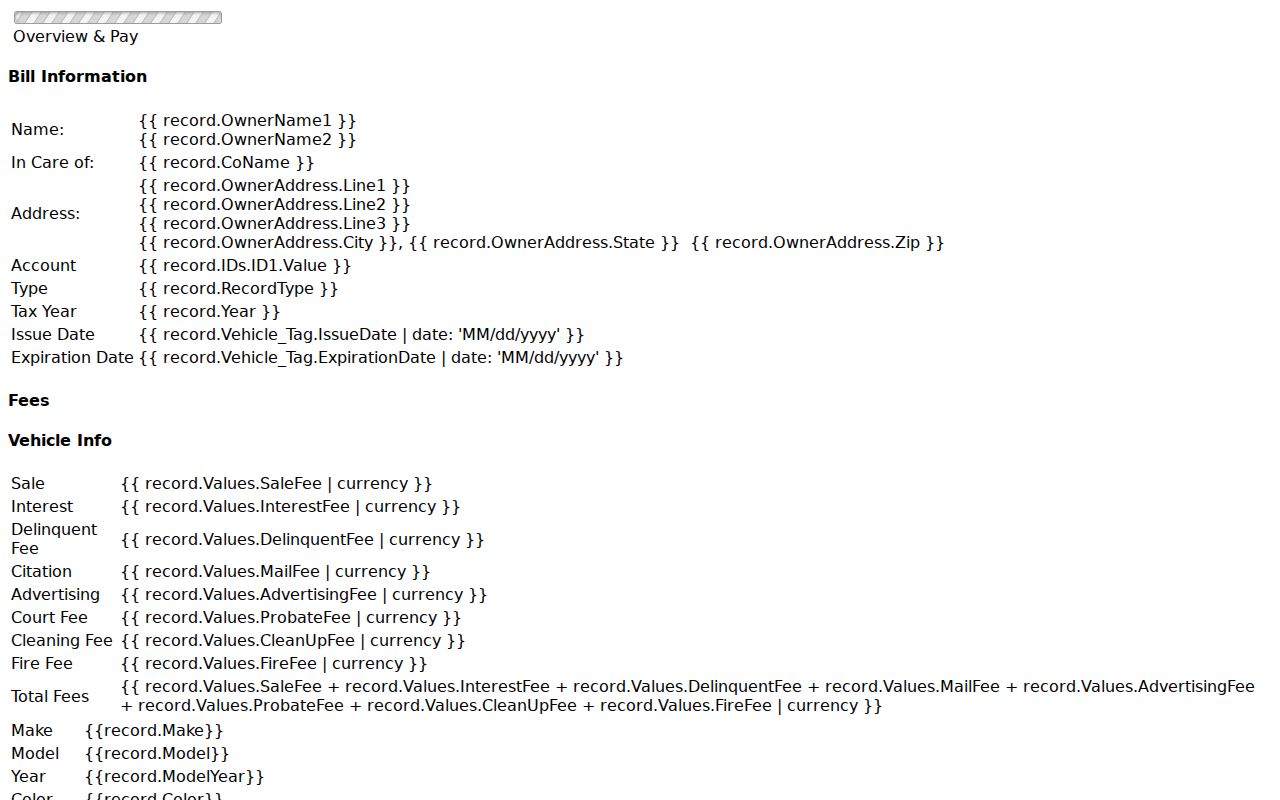
That official Catalis view shows field arrangement, not property value.
Test a Crenshaw Sale Figure Before Comparing It
A deed on file may state a consideration figure. Yet not every transfer makes a clean market comparable. Family conveyances and estate distributions answer a different question. Quitclaims, tax deeds, foreclosure instruments, and partial-interest transfers can produce misleading numbers. Multi-parcel transactions can do the same.
Pull the deed through the Crenshaw Probate route. Check its parties, instrument type, execution and recording dates. Then check the full legal description against the tax parcel. When one consideration figure covers several tracts, never assign the total to a single parcel without solid allocation evidence. The county portal sets its own image fees and field formats. Confirm those details before you buy.
A current private appraisal can weigh property condition and live market evidence. An older deed or tax roll simply lacks both. Keep four figures in separate labeled columns: recorded consideration, official tax appraisal, assessed value, and professional appraisal. Each one tells a different story about worth.
Request Missing Crenshaw Valuation Records
Missing years call for a direct request. The Revenue Commissioner sits at 29 S Glenwood Avenue in Luverne. Mail goes to PO Box 208. Bring the parcel ID, account number, legal description, and the tax years in question. Say exactly which fields or change history you need. Ask whether electronic inspection is available. Get a fee estimate before ordering copies.
Alabama's resident public-record framework in Code §§36-12-40 through 36-12-47 opens a request route. It is subject to statutory exceptions and agency procedures. Act 2024-278 allows standard forms, permits reasonable estimated fees, and sets acknowledgement and response steps. A narrow parcel-and-year request works far better than demanding every valuation record at once.
Assessment disputes follow a tighter clock. Statewide guidance calls for a written Board of Equalization protest within 30 calendar days. That clock runs after final publication of the annual assessment notice. Confirm Crenshaw County's actual publication date, filing location, and evidence requirements rather than trusting a generic calendar.
What a Crenshaw County Assessed Value Does Not Prove
An assessed value is a tax-administration figure, nothing more. It is not a promise of what a buyer would pay. It is not a boundary determination. Nor is it an independent appraisal. Market conditions and physical condition can stray far from the inputs behind the number in the record.
Comparisons only hold when the land stays the same. A parcel number can change after a split or combination, and a single tax account may carry several property rows. Keep the legal description handy. Match recorded acreage or subdivision references before charting any trend. If the land itself changed, a numerical jump says nothing about appreciation of an unchanged parcel.
Some decisions need more than the tax roll. When current condition, improvements, access, or market evidence matters, get the right professional evaluation. Crenshaw County's official fields still serve their purpose: checking tax administration and documenting a dated government record. Just respect the limits of what that record proves.
Value is not price. A Crenshaw County assessed value is not what a property is guaranteed to sell for, and it is not an independent appraisal.